Can dogs eat conkers? The autumn walk hazard worth knowing about

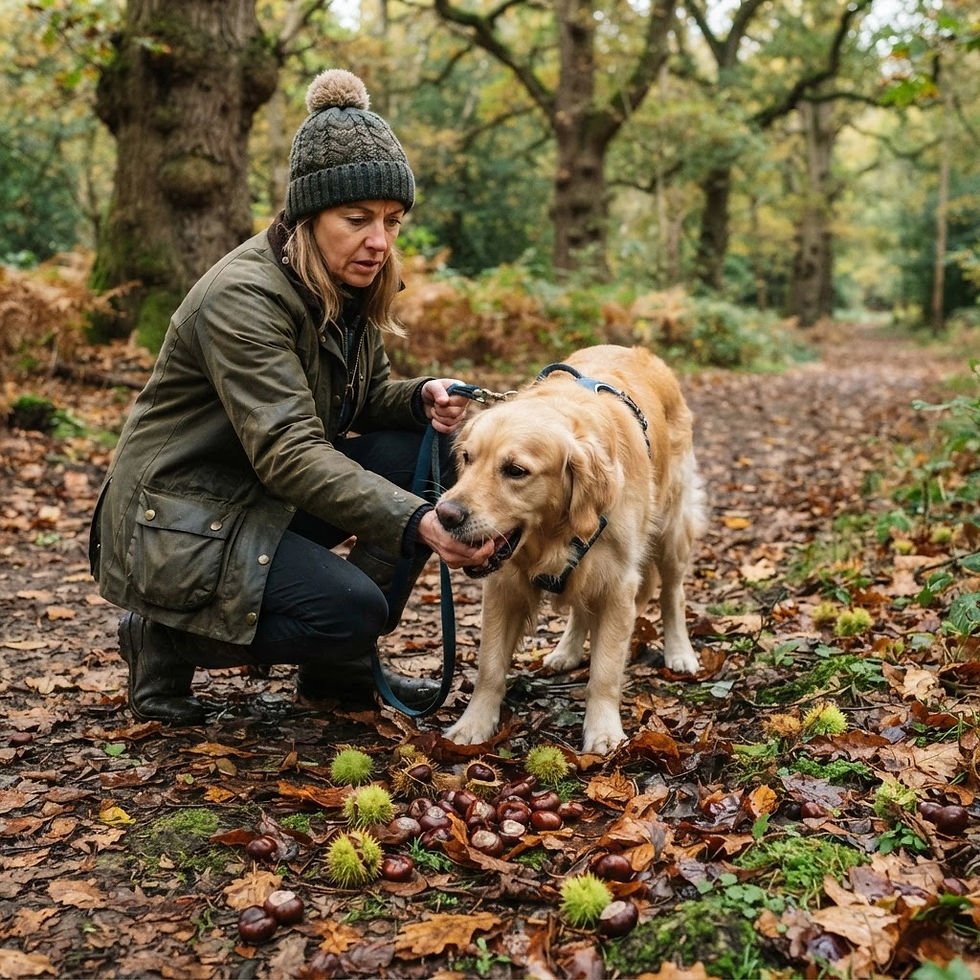
There are few things more tempting to a dog than something they have just been told to leave alone. In autumn, that often means a conker.
By October they are everywhere, scattered under horse chestnut trees and rolling across paths. To a dog, particularly one with a habit of carrying home anything remotely ball-shaped, they can look like a perfectly good toy.
They are not.
Conkers are the seeds of the horse chestnut tree, Aesculus hippocastanum. Eating them can cause stomach and intestinal problems in dogs, while swallowing one whole, or in a large piece, brings another risk: it can become lodged in the gut.
It is worth knowing about, but not panicking about.
The Veterinary Poisons Information Service (VPIS), which advises veterinary professionals on animal poisonings, says severe cases of poisoning after dogs eat conkers are very uncommon and the outcome is generally good.
In fact, around a third of the conker cases recorded by the service did not develop any signs at all.
What happens if a dog eats a conker?
When dogs do become unwell after eating conkers, the problems are usually gastrointestinal.
VPIS says vomiting is the most commonly reported effect. Dogs can also develop diarrhoea, abdominal discomfort and lethargy.
Then there is the conker itself.
A hard, round seed might be small enough for a dog to swallow, but that does not necessarily mean it will pass safely through the digestive system. VPIS warns that gastrointestinal obstruction is a potential risk. Its more recent guidance on autumn fruits and poisoning also specifically identifies conkers as presenting an obstruction risk.
Animal PoisonLine's autumn guidance gives the same advice, warning that a conker swallowed whole or in large chunks may obstruct the gut.
That is reason enough not to turn a conker into an emergency tennis ball when you have forgotten to bring one.
My dog has eaten a conker. What should I do?
If you know your dog has swallowed a conker, contact your vet for advice.
It helps if you can tell them what happened, roughly when it happened and whether your dog swallowed the conker whole or chewed it first. If more than one may have been eaten, tell them that too.
Watch for vomiting, diarrhoea, abdominal discomfort or unusual tiredness. These are among the effects reported in dogs after conker ingestion.
Do not make your dog vomit unless a veterinary professional has advised you to. Whether inducing vomiting is appropriate depends on what has been swallowed and the condition of the animal. The Merck Veterinary Manual's guidance on treating poisoning in animals notes that there are situations in which inducing vomiting is contraindicated.
If your dog becomes unwell, contact your vet promptly.
What if my dog only picks one up?
A dog picking up a conker is not the same thing as a dog swallowing one.
If yours proudly appears with one in their mouth, take it away and offer them something safer instead. For dogs that like to forage their way through a walk, a good "leave it" or "drop it" can earn its keep at this time of year.
There is no need to avoid every horse chestnut tree or panic at the sight of conkers on the ground. The evidence does not support treating them as an extreme danger to every dog that passes one.
But they are not dog toys either.
VPIS says severe poisoning is very uncommon, but conkers can cause gastrointestinal illness and can potentially cause an obstruction if swallowed. That makes the sensible advice fairly simple: leave the conkers on the ground and bring the ball instead.
Because for a dog, autumn is already full of things worth stopping to sniff. A conker does not need to come home with you.
This article provides general information only and is not a substitute for veterinary advice. If your dog has eaten a conker or you are concerned about their health, contact your veterinary surgeon.
References:
Veterinary Poisons Information Service, “Conkers and acorns”This supports the claims that vomiting is the most commonly reported effect, about a third of dogs in its conker cases developed no signs, and severe poisoning is very uncommon. VPIS: Conkers and acorns Veterinary Poisons Information Service
Veterinary Poisons Information Service, “Autumn fruits and poisoning”This specifically states that conkers can cause gastrointestinal signs and also present a risk of gastrointestinal obstruction. VPIS: Autumn fruits and poisoning Veterinary Poisons Information Service
Animal PoisonLine, “Autumn Hazards”Useful owner-facing source on the risk from conkers, including swallowing them whole or in large pieces. Animal PoisonLine: Autumn Hazards Animal PoisonLine
Merck Veterinary Manual, “Principles of Toxicosis Treatment in Animals”I used this only for the general point about not automatically inducing vomiting, because whether vomiting is appropriate depends on the substance and circumstances. Merck Veterinary Manual: Principles of Toxicosis Treatment Merck Veterinary Manual


Comments